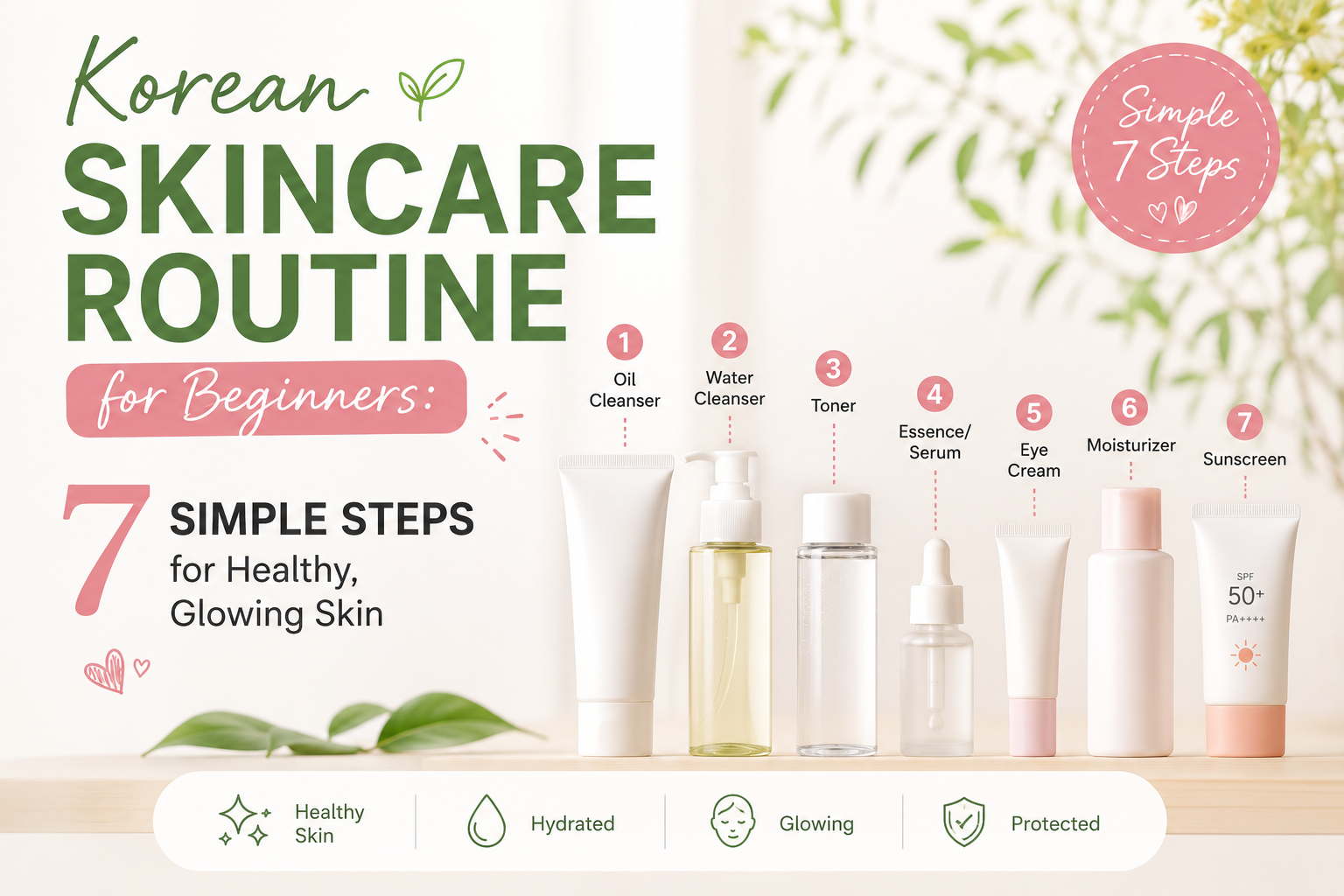
Search for a Korean skincare routine online, and you may quickly conclude that glowing skin requires ten products, three essences, two mysterious ampoules, and enough bathroom storage to qualify as a small apartment.

Thankfully, that is not the case.
A practical Korean skincare routine is less about completing a fixed number of steps and more about treating the skin gently, building hydration in comfortable layers, and protecting it from the sun. Even the American Academy of Dermatology emphasizes that consistency matters more than a complicated 10-step routine. A gentle cleanser, moisturizer, and daily sunscreen already create a strong foundation.
The goal is not to use every trending product. It is to create a routine your skin enjoys enough for you to repeat every day.
What Makes a Korean Skincare Routine Different?
Korean skincare is often associated with toners, essences, sheet masks, ampoules, and glossy “glass skin.” But the most useful idea behind the routine is much simpler: use lighter products first, richer products later, and avoid overwhelming the skin.
A basic order looks like this:
Cleanser → Toner or Essence → Serum → Moisturizer → Sunscreen
You do not need every category. Toners, essences, serums, eye creams, masks, and facial oils are optional additions rather than compulsory levels in a skincare video game.
Dermatologists recommend cleansing first, applying treatments next, and finishing with moisturizer and sunscreen. They also warn that using too many products—particularly multiple treatment products—can irritate the skin.

Morning Korean Skincare Routine
Your morning routine should prepare the skin for the day without creating twelve layers beneath your makeup.
Step 1: Cleanse Gently
Use a mild cleanser or rinse with lukewarm water, depending on your skin type and how your skin feels in the morning.
Oily skin may prefer a gentle foaming cleanser, while dry or sensitive skin may not need a full morning cleanse every day. The AAD notes that cleansing once in the evening may be sufficient for some people with dry or sensitive skin.
Avoid harsh scrubbing and very hot water. Your face should feel clean—not as though it has just survived a kitchen degreaser.
Step 2: Apply a Hydrating Toner or Essence
A Korean toner is often used to add light hydration after cleansing rather than to make the skin feel tight or stripped.
Pour a small amount into your hands and gently press it into the skin. One layer is enough for most beginners. Add a second layer only when your skin feels particularly dry.
An essence performs a similar role and can be used instead of toner. Using both is optional, not a requirement.
Step 3: Choose One Serum
Serums are concentrated products designed around a specific concern. Choose one based on what your skin actually needs.
- Hyaluronic acid: lightweight hydration
- Niacinamide: oil balance and uneven-looking tone
- Vitamin C: dullness and antioxidant support
- Centella or panthenol: soothing and barrier support
Do not begin with three active serums on the same morning. A product does not become more effective simply because it has crowded roommates.

Step 4: Moisturize
Moisturizer helps reduce water loss and supports a comfortable skin barrier. It remains important even for oily or acne-prone skin; the AAD advises choosing a moisturizer formulated for the skin type rather than skipping the step altogether.
Use a light gel or lotion for oily skin and a richer cream for dry skin. Apply it while the skin still feels slightly hydrated from the previous steps.
Step 5: Finish With Sunscreen
Sunscreen is the final skincare step in the morning and the least negotiable part of the routine.
Choose a broad-spectrum sunscreen that you can apply generously and comfortably. The AAD recommends a broad-spectrum, water-resistant sunscreen with SPF 30 or higher for daily protection. The FDA advises applying sunscreen before sun exposure and reapplying at least every two hours outdoors, or more often after swimming or sweating.
A beautifully layered routine without sunscreen is like carefully decorating a cake and then leaving it outside in the rain.
Night Korean Skincare Routine
The evening routine focuses on removing the day and supporting the skin overnight.
Step 1: Remove Makeup and Sunscreen
Use a cleansing oil, cleansing balm, or micellar water when wearing makeup, heavy sunscreen, or water-resistant products.
This is often called the first step of “double cleansing.” However, double cleansing is a practical option, not a nightly law. When you have worn little makeup or sunscreen, one gentle cleanser may be sufficient.
Step 2: Use a Water-Based Cleanser
Follow the first cleanser with a mild gel, foam, or cream cleanser.
Massage gently with your fingertips and rinse with lukewarm water. Dermatologists recommend gentle, non-abrasive cleansers and advise against aggressive scrubbing, which can contribute to irritation.
Step 3: Add Toner or Essence
Use the same hydrating toner or essence from your morning routine. There is no need to own separate morning and evening bottles unless your skincare shelf has requested a business expansion.
Step 4: Apply One Treatment
Night is a common time to use treatment products such as retinoids, exfoliating acids, or acne ingredients.
These products can be helpful for specific concerns, but using several strong actives together may cause dryness, burning, or peeling. Begin with one treatment and use it less frequently until you understand how your skin responds.
Prescription treatments should be used according to professional instructions rather than arranged according to whichever routine looked prettiest on social media.
Step 5: Seal Everything With Moisturizer
Finish with moisturizer. Choose a richer cream when your skin feels dry or a lightweight lotion when you prefer less weight.
Facial oils and sleeping masks may be added after moisturizer, but they are optional. Sheet masks can provide a temporary hydration boost, yet they do not replace daily cleansing, moisturizing, and sun protection.

Korean Skincare Routine by Skin Type
| Skin type | Prioritize | Avoid overdoing |
|---|---|---|
| Dry skin | Cream cleanser, hydrating toner, nourishing moisturizer | Frequent exfoliation and harsh foaming cleansers |
| Oily skin | Gentle foaming cleanser, lightweight serum, oil-free moisturizer | Stripping the skin or skipping moisturizer |
| Combination skin | Light layers with extra cream only on dry areas | Treating the whole face as equally oily or dry |
| Sensitive skin | Fragrance-free cleanser, soothing moisturizer, simple sunscreen | Adding several new products simultaneously |
| Acne-prone skin | Non-comedogenic basics and one targeted treatment | Scrubs, constant product switching, excessive drying |
Oily skin still needs hydration, and sensitive skin usually benefits from fewer, gentler products. Product selection should be based on skin type and tolerance rather than the number of products shown in a viral routine.
How to Introduce New Korean Skincare Products
The fastest way to make a routine confusing is to add five products on the same evening.
Introduce one new product at a time. This makes it much easier to identify which formula helped—or which one caused redness, itching, clogged pores, or irritation.
The AAD recommends testing a new product on a small area twice daily for seven to ten days before using it more widely. If redness, itching, or swelling develops, wash the product off and discontinue it.
A sensible beginner schedule looks like this:
Week 1: Cleanser, moisturizer, sunscreen
Week 2: Add toner or essence
Week 3: Add one serum
Week 4: Consider one targeted treatment if needed
You are building a relationship with your skin, not speed-dating an entire Olive Young aisle.
The Only Four Products a Beginner Really Needs
Before purchasing ampoules, pads, masks, eye creams, facial mists, and products whose purpose remains unclear even after reading the label, begin with four basics:
- A gentle cleanser
- A moisturizer suited to your skin type
- A comfortable daily sunscreen
- One optional hydrating toner or serum
This smaller routine is easier to maintain, less likely to cause confusion, and much more useful for discovering what your skin actually likes.
Consistency is more valuable than an impressive shelf.
Final Thoughts
A good Korean skincare routine does not need to be long. It needs to be gentle, balanced, and realistic.
Start with cleansing, moisturizing, and sun protection. Add hydration when your skin needs it and treatments only when you have a specific concern. Toner pads, essences, ampoules, and sheet masks can make the routine more enjoyable, but they are supporting characters—not the entire plot.
Healthy-looking skin is rarely the result of one miracle product. It usually comes from a simple routine performed consistently, with fewer impulsive experiments and considerably less bathroom chaos.
FAQ
How many steps are in a Korean skincare routine?
A Korean skincare routine can contain three steps or ten steps depending on the person. Beginners usually need only a gentle cleanser, moisturizer, and sunscreen, with an optional toner or serum added for a specific concern.
What is the correct order for Korean skincare?
The basic order is cleanser, toner or essence, serum or treatment, moisturizer, and sunscreen in the morning. At night, remove makeup first when necessary and finish the routine with moisturizer.
Do I need to double cleanse every night?
No. Double cleansing is most useful when removing makeup, heavy sunscreen, or water-resistant products. One gentle cleanser may be sufficient on days when you have worn minimal products.
Leave a Reply